One of the most overlooked decisions in t-shirt manufacturing is fabric weight. Get it wrong and your brand’s signature tee feels flimsy to customers who wanted something premium — or stiff and heavy on a buyer expecting a lightweight everyday option. Understanding GSM (grams per square metre) is the foundation of producing a t-shirt that looks, feels, and lasts the way your brand intends.
Whether you are launching your first clothing line or refining an existing range, this guide covers everything you need to know about t-shirt weight — from the lightest performance tees to the heaviest streetwear blanks — and exactly which GSM is right for your use case.
What Is GSM and Why Does It Matter?
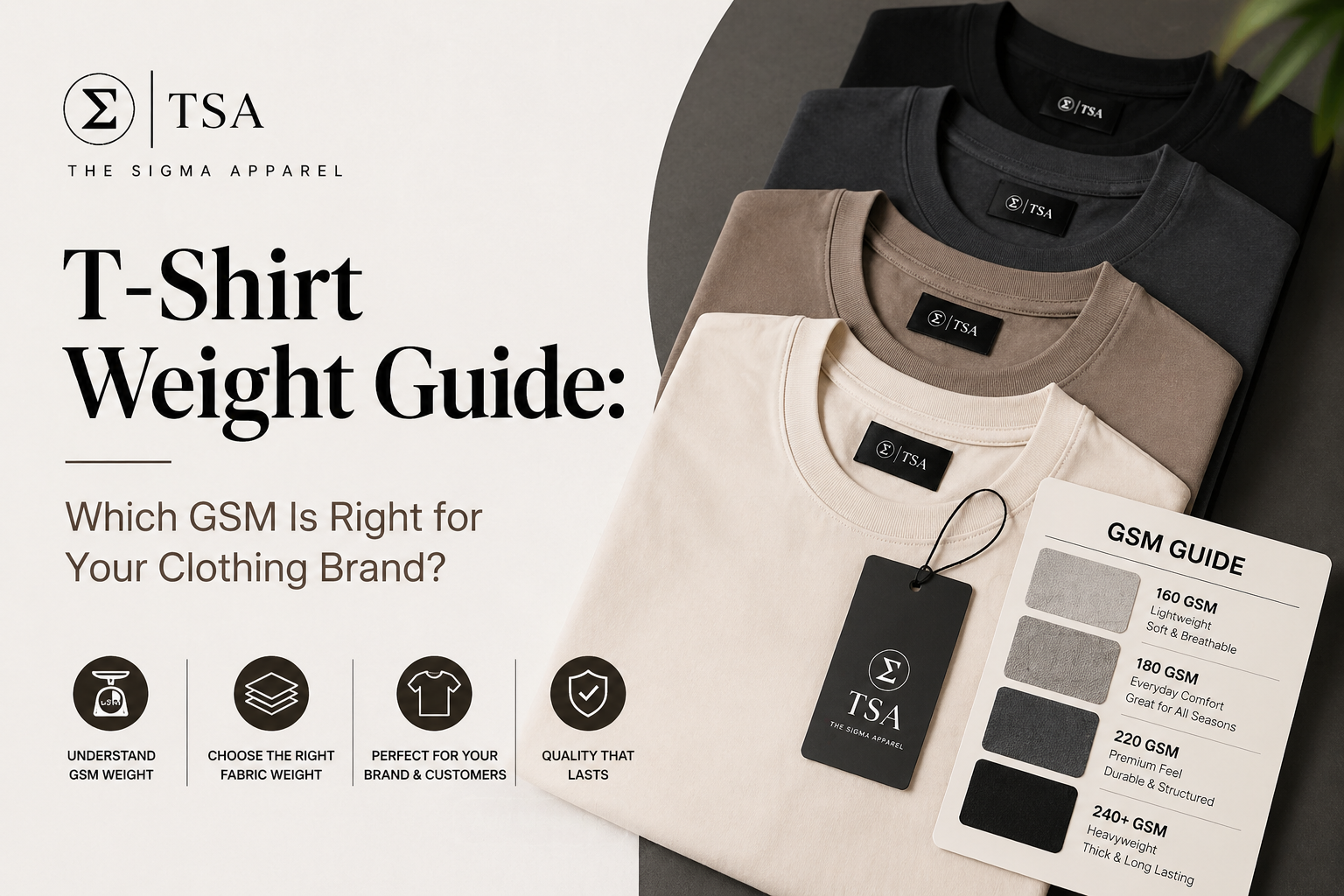
GSM stands for grams per square metre and is the standard unit used to measure fabric weight in the apparel industry. The higher the GSM, the heavier and thicker the fabric. A 140 GSM t-shirt feels light and breathable. A 220 GSM t-shirt feels substantial and structured. A 280 GSM tee sits firmly in heavyweight territory favoured by premium streetwear brands.
GSM directly affects how your finished t-shirt drapes, wears, launders, and ages. It also affects your cost per unit, since heavier fabrics use more raw material. Choosing the correct GSM for your target market is one of the most important decisions you will make during the design stage — and it should be finalised in your tech pack before sampling begins.
T-Shirt Weight Chart: GSM Ranges Explained
Lightweight: 120–160 GSM
Lightweight t-shirts in the 120–160 GSM range are highly breathable and ideal for performance athletic wear, running tops, and warm-weather basics. They dry quickly, move freely with the body, and work well with sublimation and DTG printing. The trade-off is that thin fabrics show imperfections more easily and may feel insubstantial to customers expecting a premium retail garment.
Mid-weight: 160–200 GSM
The 160–200 GSM range is the most versatile and widely used in the fashion industry. This is the sweet spot for everyday retail t-shirts, brand basics, corporate uniforms, and most private label clothing lines. Fabrics in this range are comfortable across seasons, hold their shape after repeated washing, and work with every printing and embroidery method. Most standard t-shirt manufacturing in the USA and internationally falls in this bracket.
Heavyweight: 200–280 GSM
Heavyweight t-shirts above 200 GSM are the choice for premium streetwear brands, oversized silhouettes, and garments that need to last years of heavy use. The extra weight gives a structured, substantial feel that communicates quality the moment a customer picks the garment up. Brands like Fear of God, Essentials, and most high-end blank manufacturers position their core tees in the 220–260 GSM range. These fabrics cost more per unit but command a significantly higher retail price.
Ultra-heavyweight: 280 GSM+
Ultra-heavyweight fabrics above 280 GSM are a growing trend in the premium essentials and streetwear markets. These tees have a boxy, substantial silhouette and a structured feel that makes them stand out against conventional garments. They are more expensive to produce but are particularly effective for brands positioning on quality and longevity rather than price.
Which GSM Should You Choose for Your Brand?
The right GSM depends on your brand positioning, target customer, and intended use. For activewear and performance wear, stay in the 140–160 GSM range — lightweight fabrics work best for athletic wear manufacturing. For retail basics and private label lines, 180–200 GSM is the standard. For premium streetwear and heavyweight blanks, go 220–260 GSM. If you are unsure, our fabric selection team can advise the best GSM for your specific brief during the consultation stage.
It is also worth noting that GSM is not the only factor in fabric quality. Cotton content, yarn count, and knit construction all affect the way a finished garment feels. Our guide to the best fabric for your clothing brand covers these factors in detail. When you are ready to move from planning to production, our custom t-shirt manufacturer service handles everything from fabric sourcing to final delivery.
GSM and Printing Methods: What You Need to Know
Fabric weight affects which printing method performs best on your garment. Lightweight fabrics (under 160 GSM) are ideal for sublimation printing — the ink bonds to the fibres rather than sitting on the surface, so lighter fabric gives a brighter result. Read our full guide to sublimation printing for more detail. For heavyweight cotton tees (200 GSM+), screen printing and embroidery produce the sharpest results and the most durable finish.
DTG (direct-to-garment) digital printing works across most GSM ranges but performs best on 100% cotton fabrics at 160–220 GSM, where the ink absorbs cleanly into the fibres. Our screen printing and custom embroidery services are available for all t-shirt weights — our team will advise the best method for your fabric and design during sampling.
Frequently Asked Questions
What GSM is best for a premium t-shirt brand?
For a premium t-shirt brand, 220–260 GSM is the recommended range. This weight gives a structured, substantial feel that communicates quality and commands a higher retail price. Many leading streetwear and essentials brands position their core tees in this range.
What is the most popular t-shirt GSM for retail?
The most popular GSM for retail t-shirts is 180–200 GSM. This mid-weight range is versatile across seasons, holds its shape after repeated washing, and works with every printing method. It is the standard range for private label and wholesale t-shirt manufacturing globally.
Does a heavier GSM t-shirt cost more to manufacture?
Yes. Heavier GSM fabrics use more raw material per unit, which increases your fabric cost. A 280 GSM heavyweight tee will typically cost more to manufacture per unit than a 180 GSM retail basic. However, heavier tees command significantly higher retail prices, so the margin difference often favours the premium option for brand-focused lines.
What GSM is best for sublimation printing?
For sublimation printing, lightweight polyester fabrics in the 120–160 GSM range produce the best results. Sublimation bonds to polyester fibres — not cotton — so a higher polyester content and lighter fabric weight gives the brightest, most accurate colour reproduction.
Can I specify a custom GSM with Sigma Apparel?
Yes. Sigma Apparel offers full fabric customisation including custom GSM selection. During the consultation stage, our fabric team will guide you through available options and recommend the most suitable weight for your brand, use case, and budget. Samples are produced before bulk production to confirm the fabric meets your requirements.