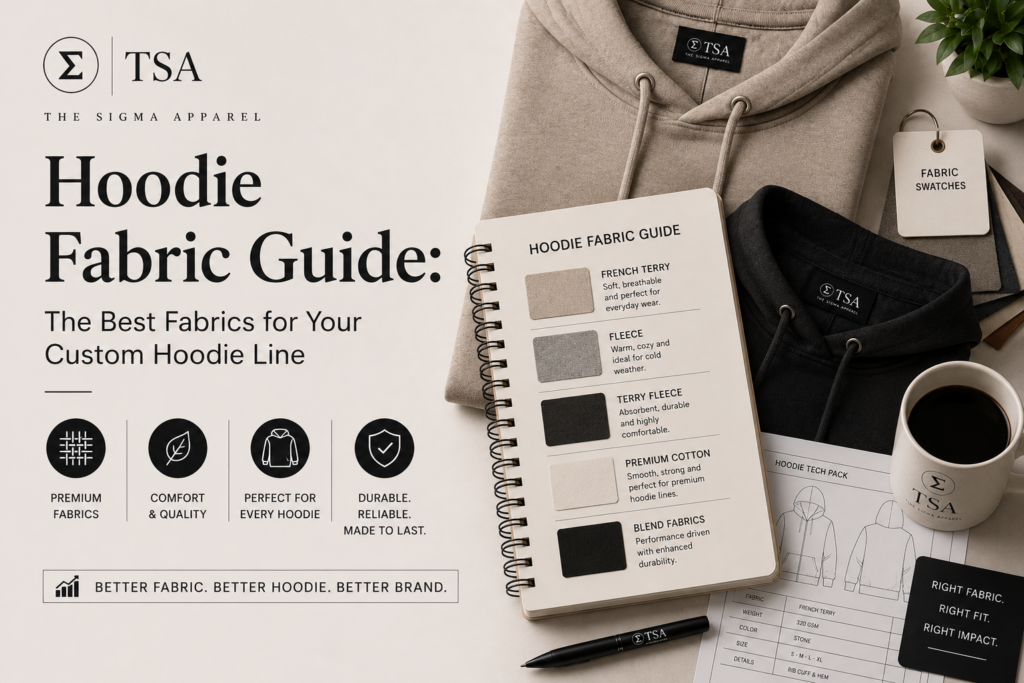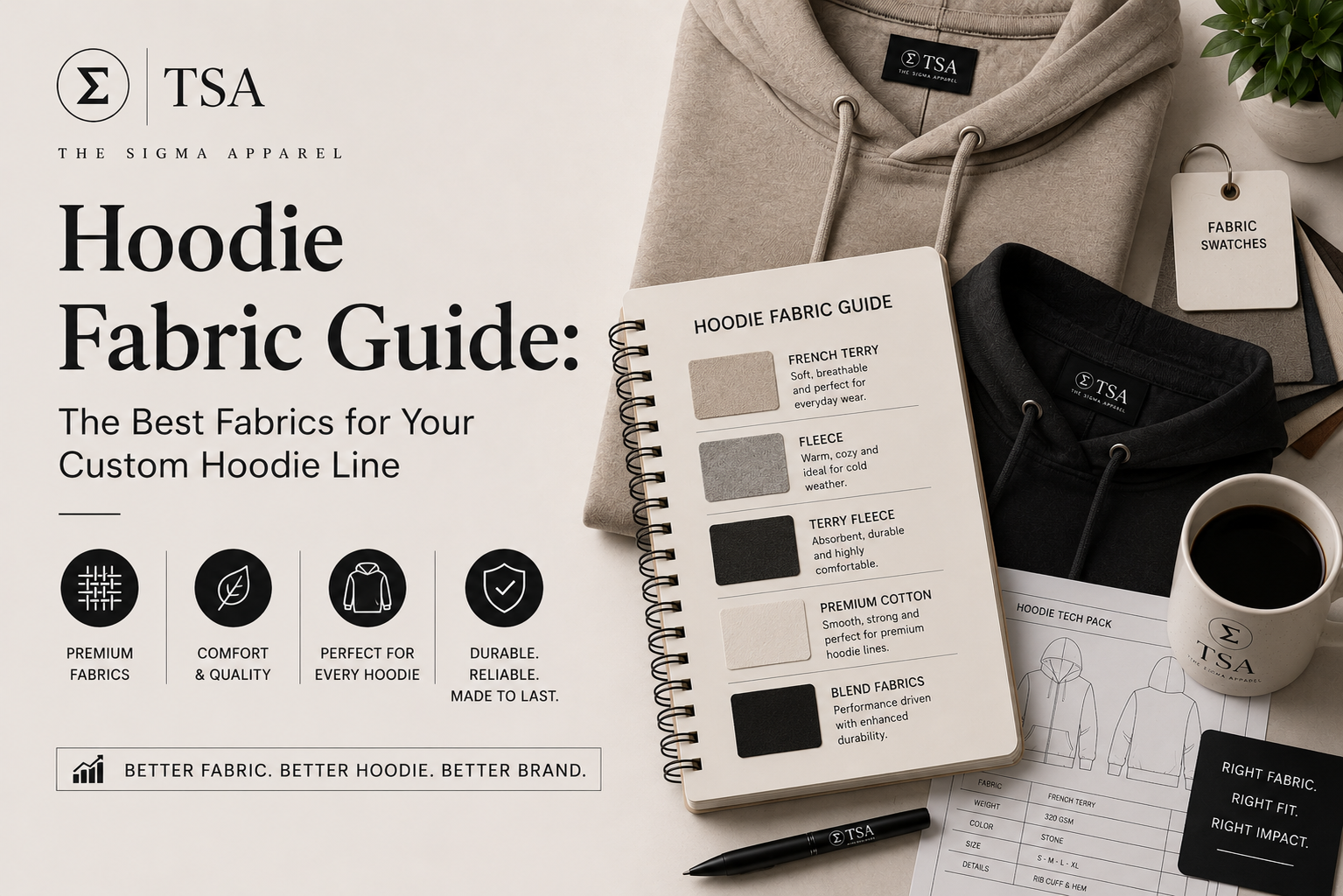
Fabric is the single biggest determinant of how your hoodie feels, performs, and is perceived by the customer who picks it up. Get the fabric right and your hoodie feels premium, wears comfortably, and builds brand loyalty through everyday use. Get it wrong and even the most well-designed hoodie will feel cheap, pill quickly, or shrink in the wash.
This guide covers every major hoodie fabric option — French terry, fleece, brushed cotton, performance blends, and organic alternatives — with recommendations for which fabric suits which brand type and price point.
Key Fabric Properties to Evaluate for Hoodies
Before diving into specific fabric types, it helps to understand the key properties that differentiate hoodie fabrics. The most important are: GSM (weight — heavier fabrics feel more premium and are better for structured, oversized silhouettes), fabric face (how the outside surface feels and looks), fabric back (whether the interior is brushed for softness or left looped), stretch and recovery (how the fabric responds to movement and whether it holds its shape), and pilling resistance (how the fabric holds up to repeated wear and washing).
French Terry
French terry is a knit fabric with a smooth face and looped interior. It is lighter and less bulky than traditional fleece (typically 250–300 GSM) and has a clean, minimal look that has made it extremely popular in the premium casualwear and athleisure markets. French terry is breathable, comfortable in a wide temperature range, and drapes well — making it a popular choice for cropped hoodies, lightweight pullovers, and elevated basics brands.
French terry works particularly well for brands that want a clean, contemporary aesthetic without the heavy, structured look of a fleece hoodie. Its relative lightness also makes it suitable for year-round wear, which increases the commercial utility of the garment. Our hoodie manufacturing service offers French terry hoodies starting at 100 pieces per style.
Fleece
Traditional fleece is the most common hoodie fabric — a knit construction with a brushed interior that creates the characteristic soft, warm lining most people associate with the word ‘hoodie.’ Standard fleece weight for hoodies ranges from 300 GSM (midweight, versatile) to 450 GSM (heavyweight, structured). Higher-GSM fleece is the fabric of choice for premium streetwear brands and oversized silhouettes where weight and structure are part of the design intention.
Fleece is available in 100% cotton (the most premium feel), cotton/polyester blends (more affordable, more durable, faster drying), and 100% polyester (the most cost-effective and widely used in athletic and promotional hoodies). 100% cotton fleece has a softer hand feel but is heavier and slower to dry. Cotton/polyester blends (typically 80/20 or 60/40) are the standard for most mid-market and premium market hoodies.
Brushed Cotton
Brushed cotton is a woven or knit fabric that has been mechanically brushed to raise the fibres on the interior surface, creating a soft, flannel-like feel without the loop structure of terry or fleece. It is popular in winter casualwear and organic cotton clothing lines for its natural, tactile softness. Brushed cotton hoodies have a slightly less structured silhouette than heavyweight fleece but feel very comfortable against the skin.
Performance and Athletic Fleece
Performance fleece fabrics use polyester or nylon construction with moisture-wicking finishes to provide the warmth of a traditional fleece hoodie with the technical performance required for athletic use. They are lighter than cotton fleece (typically 200–280 GSM), dry faster, and maintain their appearance through repeated high-temperature washing. Performance fleece is the fabric of choice for gym hoodies, training sweatshirts, and brands in the athletic wear market.
Organic and Sustainable Hoodie Fabrics
Organic cotton fleece and GOTS-certified cotton/polyester blends are increasingly in demand from consumers who prioritise sustainability. Organic cotton is grown without synthetic pesticides or fertilisers and is certified to strict environmental standards. It performs identically to conventional cotton in terms of feel and durability, but commands a premium in both production cost and retail price. For brands building a sustainability narrative around their products, organic cotton is the most credible and commercially effective fabric choice. Our fabric selection team can source organic and certified sustainable fabrics for your hoodie production.
Which Hoodie Fabric Is Right for Your Brand?
Premium streetwear and essentials brands: 400–450 GSM cotton fleece or heavyweight French terry. The weight and substance communicates premium quality at first touch. Athleisure and casual lifestyle brands: 300–350 GSM French terry or mid-weight cotton/polyester fleece — versatile, comfortable across seasons, clean aesthetic. Gym and training brands: 220–280 GSM performance polyester fleece — lightweight, moisture-wicking, fast-drying. Sustainable brands: GOTS-certified organic cotton fleece or French terry — the sustainability credential supports premium pricing.
Frequently Asked Questions
Q. What is the best fabric for a premium hoodie?
For a premium hoodie, 400–450 GSM 100% cotton fleece or heavyweight French terry is the industry standard. This weight and composition gives the structured, substantial feel that communicates quality and supports the pricing strategy of premium streetwear and essentials brands.
Q. What is the difference between French terry and fleece for hoodies?
French terry has a smooth face and looped interior, making it lighter, more breathable, and more contemporary in aesthetic than traditional fleece. Fleece has a brushed interior that is warmer and more plush. French terry is better for lighter-weight, year-round styles; fleece is better for heavyweight, warm, winter-focused hoodies.
Q. What GSM should a hoodie be?
Mid-weight hoodies (everyday basics, casual wear) typically use 280–320 GSM fabric. Premium and heavyweight hoodies (oversized streetwear, structured silhouettes) use 380–450 GSM. Lightweight performance hoodies for athletic use typically use 200–260 GSM technical fleece.
Q. Can I use organic cotton for my hoodie production?
Yes. Sigma Apparel can source GOTS-certified organic cotton fleece and French terry for hoodie production. Organic cotton hoodies typically cost 10–20% more per unit to manufacture than conventional cotton equivalents, but command a meaningful retail price premium for brands with a sustainability positioning.
Q. What hoodie fabric is best for sublimation printing?
Sublimation printing requires a high polyester content fabric — typically 100% polyester fleece or performance fabric — for the ink to bond correctly and produce vibrant, accurate colours. Sublimation does not work on cotton fabrics. If you are planning an all-over print hoodie, your fabric must be polyester-based.