If you are building a clothing brand and want garments that are truly original — not adapted from existing blanks — cut and sew manufacturing is the method you need to understand. It is the approach used by every major fashion house, premium streetwear label, and serious private label brand in the world. And yet many new brand founders do not fully understand what it means, how it differs from other manufacturing methods, or when it is the right choice.
This guide explains what cut and sew manufacturing is, how the process works from start to finish, and how to know whether it is the right approach for your brand.
What Is Cut and Sew Manufacturing?
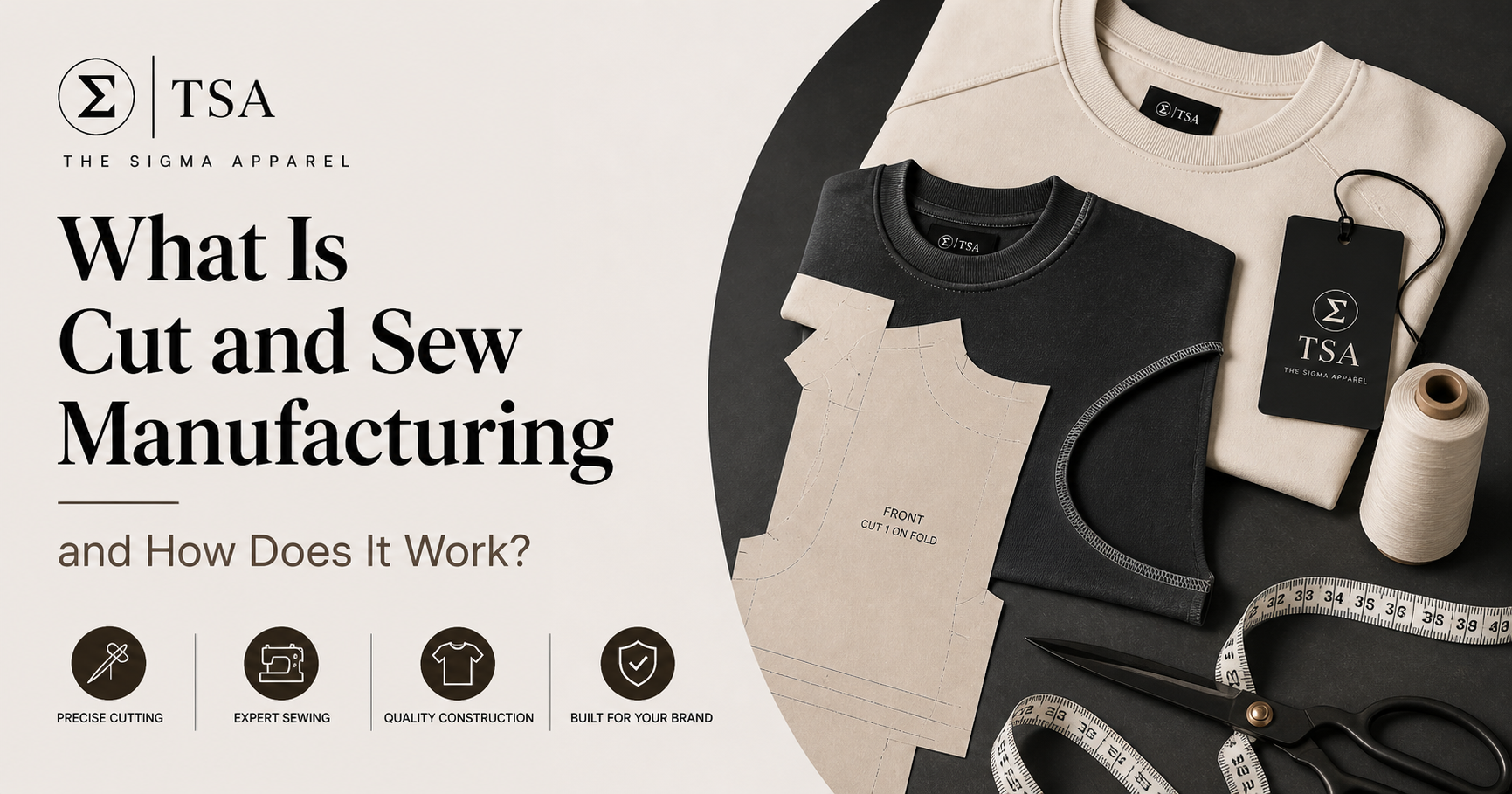
Cut and sew manufacturing is the process of building a garment from scratch — starting with raw fabric, cutting it into individual panels using a pattern, and then sewing those panels together into the finished garment. Every element of the garment — the silhouette, the fit, the construction, the seam type, the hardware — is created specifically for your design. There are no pre-existing blanks or templates involved. Our cut and sew apparel manufacturing service covers all garment categories from t-shirts and hoodies to jackets, workwear, and activewear.
The term is used to distinguish this method from screen printing or embroidering onto existing blanks (pre-made garments purchased from a supplier). Cut and sew is more complex and typically more expensive per unit at low quantities — but it is the only method that gives you complete creative control over every aspect of your garment.
How Does the Cut and Sew Process Work?
Step 1: Tech pack creation
The process begins with a tech pack — a detailed technical document that specifies every element of your garment: measurements, construction details, fabric specifications, colour codes, hardware, labels, and stitching requirements. Our team can create a tech pack from your design concept, sketches, or reference images. The tech pack is the blueprint for everything that follows, so it needs to be accurate and comprehensive before fabric is ever cut. If you are starting a clothing line for the first time, investing in a proper tech pack is one of the most important things you can do.
Step 2: Pattern grading
Once the tech pack is approved, the pattern is graded across all required sizes. Grading ensures that the proportions and fit of the garment scale correctly from XS to 5XL — it is not simply a case of scaling the template up or down uniformly. Professional pattern grading maintains the intended fit at every size, which is why it needs to be done by an experienced pattern maker.
Step 3: Fabric sourcing and cutting
With the pattern graded and approved, fabric is sourced or confirmed from our in-house inventory. The fabric is then laid in multiple layers and cut using the pattern pieces to produce the individual panels for each garment. Fabric selection at this stage is critical — our fabric selection guide covers the key considerations in detail.
Step 4: Sewing and assembly
The cut panels are assembled by skilled machinists using industrial sewing machines. Different seam types — flatlock, overlock, double-needle, chain stitch — are used depending on the garment type and technical requirement. This stage is where the quality of the finished garment is determined by the skill of the production team and the accuracy of the tech pack.
Step 5: Customisation, labelling, and finishing
Once the garment is assembled, customisation is applied — screen printing, embroidery, or sublimation. Your custom labels are attached, the garment is quality inspected against the tech pack, and it moves to packaging and shipment.
Cut and Sew vs Buying Blanks: What Is the Difference?
Buying blanks means purchasing pre-made garments (typically generic t-shirts or hoodies from a bulk manufacturer) and applying your custom branding on top. This is a faster and cheaper way to get to market, but it means every brand using the same blank supplier has access to the same garment. Your hoodie looks identical to your competitor’s hoodie before the print is applied.
Cut and sew gives you a garment that is entirely your own. The fit, the construction, the weight, the seam placement — every detail reflects your brand’s design decisions. For brands that compete on product quality and distinct design rather than price, cut and sew is the only method that delivers a genuinely unique garment. Our cut and sew manufacturing service has a MOQ of 100 pieces per style, making it accessible to brands at every stage of growth.
Is Cut and Sew Right for Your Brand?
Cut and sew is the right choice when your brand competes on product differentiation, when a specific fit or silhouette is central to your identity, or when you are manufacturing garment types that are not available as blanks (such as custom workwear, swimwear, or lingerie). If you are launching a basics brand competing on price, buying blanks and printing may be a more practical starting point. Our team can advise which approach is right for your specific brief.
Frequently Asked Questions
What is the minimum order for cut and sew manufacturing?
Sigma Apparel’s minimum order quantity for cut and sew manufacturing is 100 pieces per style and colour. This applies to all garment categories including t-shirts, hoodies, jackets, and workwear.
How long does cut and sew manufacturing take?
The standard turnaround for cut and sew manufacturing is 30 to 35 business days from sample approval to delivery. Sample production takes approximately 15 business days. The total timeline from initial inquiry to delivery is typically 6 to 8 weeks including tech pack creation and sample approval.
Do I need a tech pack for cut and sew manufacturing?
Yes. A tech pack is essential for cut and sew manufacturing — it is the document that specifies every element of the garment. Sigma Apparel can create a tech pack for your design as part of the manufacturing process, or you can provide one if you already have it. Production does not begin until the tech pack is approved.
Can I do cut and sew manufacturing as a new brand with no experience?
Absolutely. Many of Sigma Apparel’s cut and sew clients are first-time brand founders with no prior manufacturing experience. Our team guides you through every stage — from tech pack creation and fabric selection to sampling and bulk production. You do not need any technical background to get started.
What garment types can be produced with cut and sew manufacturing?
Cut and sew manufacturing can produce virtually any garment type, including t-shirts, hoodies, jackets, trousers, shorts, swimwear, lingerie, workwear, activewear, leggings, and outerwear. Any garment that requires a specific silhouette, fit, or construction is a candidate for cut and sew production.