Two of the most popular customisation methods in apparel manufacturing are screen printing and embroidery. Both can produce striking, long-lasting results — but they work very differently, suit different types of designs, and come with different cost structures. Choosing the wrong method for your brand or product can mean wasted budget, compromised quality, or a finish that simply does not match your vision.
This guide breaks down the key differences between screen printing and embroidery, covering cost, durability, design suitability, and ideal use cases — so you can make an informed decision before your next production run.
What Is Screen Printing?
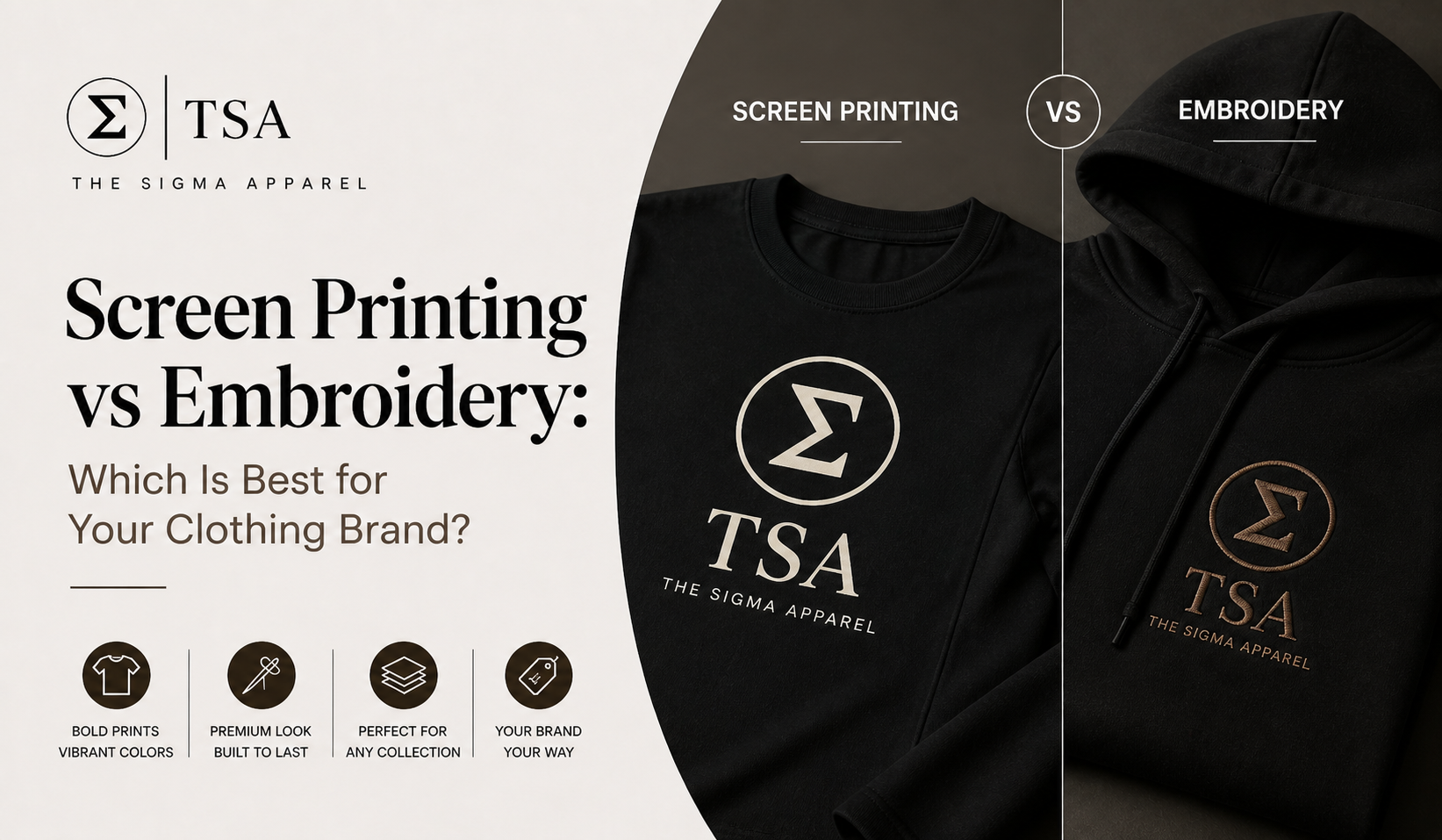
Screen printing is a technique where ink is pressed through a mesh screen onto the fabric surface, one colour at a time. Each colour in your design requires a separate screen, which is why screen printing has setup costs that make it more cost-effective at higher quantities. Our screen printing service handles everything from single-colour logo prints to complex multi-colour designs across t-shirts, hoodies, workwear, and more.
Screen printing produces bold, vibrant colours and a smooth, flat finish that sits on the surface of the fabric. The ink is highly durable — a quality screen print will survive hundreds of washes without cracking or fading, provided the correct ink type is used for the fabric.
What Is Embroidery?
Embroidery uses a computerised machine to stitch your design directly into the fabric using thread. The result is a raised, textured logo that carries a premium, tactile quality that screen printing cannot replicate. Our custom embroidery service digitises your logo into a stitch file and applies it to your garments with consistent precision across every unit.
Embroidery is particularly valued for its professional appearance and exceptional durability. A well-executed embroidered logo will outlast the garment itself — the thread does not crack, fade, or peel under any normal washing conditions. This makes it a preferred choice for corporate uniforms, polo shirts, caps, and premium outerwear.
Screen Printing vs Embroidery: Cost Comparison
Screen printing has a higher setup cost because each colour requires a separate screen to be prepared. For small quantities, this can make screen printing more expensive per unit than embroidery. However, at higher volumes (200+ pieces), screen printing becomes significantly cheaper per unit because the setup cost is spread across more garments.
Embroidery cost is calculated by stitch count — the more complex and larger your design, the higher the cost per unit. Small chest logos with moderate stitch counts are very cost-effective with embroidery even at low quantities. Large, highly detailed designs with 20,000+ stitches can become expensive per unit at scale. For brands weighing up which method makes commercial sense, our custom t-shirt manufacturer and hoodie manufacturer teams can advise on costs during the quoting stage.
Which Method Is More Durable?
Both screen printing and embroidery are highly durable when executed correctly. Embroidery is generally considered the more durable of the two — thread stitched into fabric does not degrade under UV exposure, heat, or repeated washing the way ink can. This is why embroidery is the standard for workwear, corporate uniforms, and high-use garments that will be washed frequently in commercial laundries.
High-quality screen printing using plastisol or water-based inks on 180–220 GSM cotton is also extremely durable and will retain colour and sharpness for years of normal use. The main risk for screen prints is cracking — which occurs when low-quality inks are used or the garment is stretched excessively. Our screen printing service uses premium inks and proper curing to ensure the durability you need. For workwear and industrial uniforms, embroidery is typically the preferred choice due to its resistance to commercial washing conditions.
Which Is Better for Different Design Types?
Screen printing works best for:
- Large designs covering significant areas of the garment (chest, back, full-front)
- Designs with many colours or photographic detail (using halftone techniques)
- All-over print patterns across the entire garment
- High-volume orders where cost per unit needs to be minimised
- Streetwear, fashion brands, event merchandise, and promotional apparel
Embroidery works best for:
- Small, detailed logos with defined outlines (chest logo, sleeve patch, cap front)
- Corporate uniforms, polo shirts, and workwear where a professional finish is required
- Caps, hats, and structured garments where printing is not practical
- Premium brands where the raised, tactile quality of embroidery adds perceived value
- Low to medium volume orders with consistent logo placement
Can You Use Both on the Same Garment?
Yes — and many brands do. A common approach is to use embroidery for a small chest or sleeve logo (where precision and quality are paramount) combined with screen printing for a large graphic on the back. This combination is popular in streetwear manufacturing and for brands that want the premium feel of embroidery alongside the visual impact of a large printed design. Both services are available in-house at Sigma Apparel — contact us to discuss combining techniques in a single production run.
Frequently Asked Questions
Is embroidery or screen printing better for polo shirts?
Embroidery is the standard choice for polo shirts, particularly for corporate and workwear applications. A left-chest embroidered logo communicates professionalism, withstands repeated washing, and looks more premium than a printed alternative on a structured knit fabric.
What is the minimum order for screen printing?
Sigma Apparel’s minimum order for screen printing is 100 pieces per design and colour. Screen printing becomes increasingly cost-effective at higher quantities as the setup cost is spread across more units.
Can embroidery be done on any fabric?
Embroidery works on most woven and knit fabrics including cotton, polyester blends, denim, fleece, and nylon. Very lightweight or stretch fabrics (under 140 GSM or with high elastane content) may require a backing stabiliser to prevent distortion during stitching. Our embroidery team advises on fabric suitability during the sampling stage.
Does screen printing crack over time?
Low-quality screen prints using cheap inks can crack after repeated washing, particularly on stretch fabrics. High-quality screen printing using premium plastisol or water-based inks on correctly prepared fabric should remain intact and vibrant for several years of normal use.
Which customisation method should I choose for a workwear uniform?
Embroidery is the standard for workwear uniforms. The raised, durable finish withstands commercial washing and provides a professional appearance that communicates brand quality. For large back prints or hi-vis markings, screen printing is appropriate as a complement to embroidered chest logos.