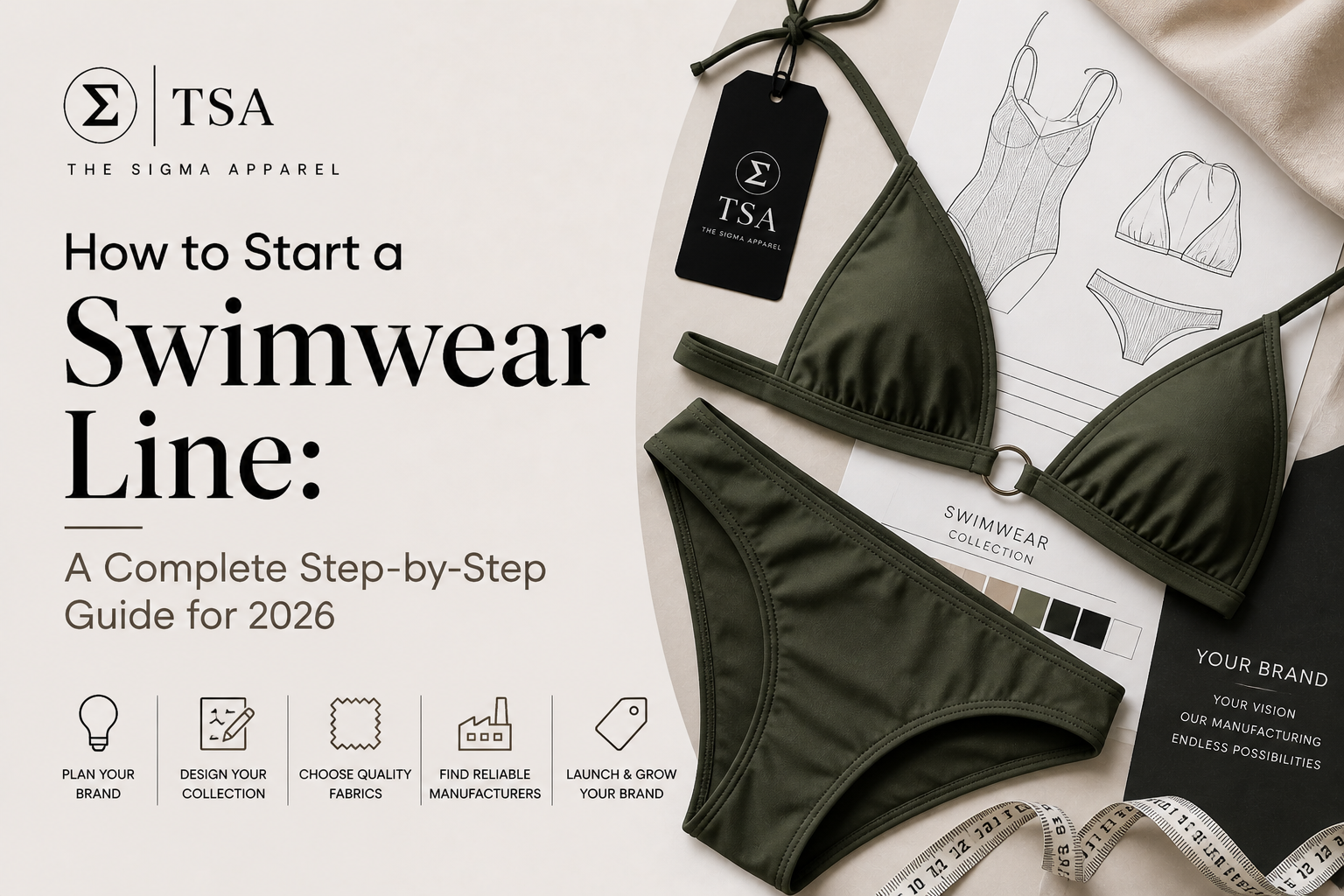
The global swimwear market is worth over $21 billion and is projected to grow steadily through 2030. Driven by a booming resort wear culture, the rise of social media influencer brands, and growing demand for sustainable and inclusive swimwear, this market offers real commercial opportunity — even for first-time brand founders. But swimwear is one of the most technically demanding garment categories to manufacture, and getting it wrong is expensive.
This guide walks you through every step of launching a swimwear line in 2026 — from defining your niche and choosing fabrics to finding a swimwear manufacturer, managing samples, and launching your brand. Whether you want a luxury resort label or a performance surf brand, this is where to start.
Step 1: Define Your Swimwear Niche
The swimwear market is broad and crowded. The brands that break through are the ones with a clear, specific positioning. Before you do anything else, answer these three questions: Who exactly is your customer? What do they want that existing brands do not give them? And why will they choose you over a well-funded competitor?
Common swimwear niches with strong commercial momentum in 2026 include inclusive sizing and body-positive swimwear, sustainable and recycled-fabric swimwear, luxury resort and cover-up collections, performance and competitive swimming gear, modest swimwear, and UV-protective family swimwear. Picking one does not mean you can never expand — it means your first collection has a focused customer and a clear message.
Step 2: Choose Your Swimwear Fabrics
Swimwear has stricter fabric requirements than most garment categories. The fabric must resist chlorine and saltwater degradation, retain its shape and colour after repeated immersion, dry quickly, and stretch and recover without sagging. The standard fabric for swimwear is 80/20 nylon/Lycra or polyester/spandex, typically in the 170–210 GSM range. Nylon feels softer and is more resistant to chlorine; polyester is more affordable and better for UV-protective applications. See our fabric selection guide for more detail on swimwear-appropriate materials.
For sustainable swimwear lines, recycled nylon (such as Econyl, made from reclaimed fishing nets and ocean plastic) is increasingly in demand and commands a premium retail price. Confirm your manufacturer can source this material before committing to it in your brand story.
Step 3: Design Your Collection
Start with a tight, focused collection — 4 to 6 styles is appropriate for a first launch. This typically means 2 to 3 bikini silhouettes, 1 to 2 one-piece styles, and optionally a cover-up or matching shorts. Develop your designs as sketches or digital illustrations first, then work with your manufacturer to produce detailed tech packs. A tech pack for swimwear needs to specify not just dimensions and colourways but also lining requirements, elastic type and tension, hardware (clasps, rings, sliders), and seam construction. Our swimwear manufacturing team guides clients through tech pack development from concept stage.
Step 4: Find a Swimwear Manufacturer
Finding a manufacturer experienced specifically in swimwear is critical. Swimwear requires specialist knowledge of stretch seam construction, lining integration, elastic insertion, and chlorine-resistant dyeing — most general apparel manufacturers do not have this expertise. Look for a manufacturer with a dedicated swimwear track record, a low MOQ that matches your launch volume, and a clear sampling process. Sigma Apparel’s swimwear manufacturer service has a 100-piece MOQ per style and includes full sampling before bulk production. Our guide to finding the right clothing manufacturer covers the vetting process in detail.
Step 5: Order Samples and Conduct Fit Testing
Swimwear fit testing is more critical than almost any other garment category. A bikini that looks perfect on a flat lay can fail completely when worn in water — the elastic relaxes, the lining bunches, or the fabric goes transparent when wet. You need to physically wear-test your samples in water before approving bulk production. Test for: opacity when wet, elastic recovery after immersion, colour fastness in chlorine and salt water, strap security, and fit across multiple body types.
Do not rush this stage. It is far cheaper to order revised samples than to receive a bulk shipment of swimwear that fails in water. Most experienced swimwear brands request two rounds of samples before approving bulk production.
Step 6: Launch and Market Your Swimwear Brand
Swimwear is one of the most visual product categories in fashion — your launch strategy should reflect that. Invest in high-quality lifestyle photography in a relevant setting (pool, beach, resort). Build your Instagram and Pinterest presence before launch, not after. Influencer gifting in the micro-influencer space (10k–100k followers) consistently delivers strong ROI for swimwear brands at the early stage, particularly in the lifestyle and travel content space.
Frequently Asked Questions
What is the minimum order quantity for swimwear manufacturing?
Sigma Apparel’s minimum order quantity for custom swimwear is 100 pieces per style and colour. This applies to bikinis, one-pieces, boardshorts, and cover-ups manufactured under our swimwear manufacturing service.
What fabric is best for a swimwear line?
The industry standard for swimwear fabric is 80/20 nylon/Lycra or polyester/spandex in the 170–210 GSM range. Nylon is softer and more chlorine-resistant; polyester is more cost-effective and UV-resistant. For sustainable lines, recycled nylon (Econyl) is the premium choice.
How much does it cost to start a swimwear line?
A first swimwear production run with Sigma Apparel at 100 pieces per style typically requires an investment of $2,000–$6,000 depending on the complexity of the styles, fabric choices, and number of colourways. Sampling costs are separate and are quoted per style.
How long does swimwear manufacturing take?
Standard turnaround for swimwear manufacturing at Sigma Apparel is 30–35 business days from sample approval to delivery. Sample production takes approximately 15 business days.
Do I need to wet-test swimwear samples?
Yes — wet testing is essential for swimwear. You need to test fabric opacity, elastic recovery, colour fastness, and fit performance in water before approving bulk production. Skipping this step is one of the most common and costly mistakes first-time swimwear brand founders make.